You can spend an entire morning exploring the Marble Mountains and still miss the most remarkable thing there.
Carved directly into the cliffs and caves of the Marble Mountains are 78 Sino-Vietnamese inscriptions, dating from 1640 through the 20th century. This collection of rock inscriptions, known as ma nhai, was inscribed on the UNESCO Memory of the World Regional Register for Asia-Pacific in 2022.
What makes it especially interesting is that most visitors walk past these inscriptions without knowing what they record. So visiting the Marble Mountains is not simply about climbing, exploring caves, and taking photos. Knowing where to look, which entrance to use, and what you can skip allows you to see much more within the same morning.
What should you know before visiting the Marble Mountains?
| Item | Information |
| Thuy Son entrance ticket | VND 40,000 for adults · VND 10,000 for students · Free for children under 6 |
| Elevator ticket | VND 15,000 one way · VND 30,000 round trip. Sold separately and not included in the entrance ticket |
| Am Phu Cave ticket | VND 20,000 for adults · VND 7,000 for students. Sold separately |
| On-site tour guide | VND 50,000 per group |
| Opening hours | 07:00 to 17:30, including public holidays and Tet |
| Address | 81 Huyen Tran Cong Chua Street, Ngu Hanh Son District, approximately 8 km from the city center |
| Visiting time | 2 hours for a concise visit · 3.5 hours for a more complete visit |
| The other five mountains | Free to enter, with no admission fee |
| Recommended route | Enter through the western gate and exit through the eastern gate |
For two adults, a full morning visit including a round-trip elevator ride and Am Phu Cave costs around VND 180,000 in total admission fees. If you take the stairs and skip Am Phu Cave, the cost drops to just VND 80,000. And honestly, that VND 80,000 option already covers almost everything worth seeing.
Marble Mountains Da Nang: Six peaks with five names
The Marble Mountains are a cluster of six limestone outcrops that push up out of the coastal sand a few hundred metres back from the water, and what makes them strange is precisely that isolation. Nothing connects to them. There is no ridge running in, no foothill leading up, just six blocks of stone standing alone on flat ground, as though someone set them down and walked away.

Where does the name Marble Mountains come from?
When you hear the name Marble Mountains, you might assume there are five mountains. In reality, the complex consists of six limestone mountains: Kim Son, Moc Son, Thuy Son, Tho Son, and Hoa Son, with Hoa Son further divided into Duong Hoa Son and Am Hoa Son.
The reason there are five names is that in 1825, Emperor Minh Mang named the complex after the Five Elements: Metal, Wood, Water, Fire, and Earth. Hoa Son consists of two mountains standing side by side, connected by a rocky path, bringing the total to six.
The name Marble Mountains naturally leads people to assume that this is a group of “five mountains,” and even many travel guides describe it that way. Geographically, however, the complex consists of six mountains.
Before the name based on the Five Elements was introduced, the area was known locally as Non Nuoc. The old name is still used today, particularly when referring to Non Nuoc Beach and the stone-carving village at the foot of the mountains.
Is the Marble Mountains just a sightseeing attraction?
There is much more than scenery here. The entire site was designated a Special National Relic under Decision No. 1820/QD-TTg in 2018.
The six mountains contain a network of pagodas, caves, tunnels, and historical sites associated with the history, religion, and culture of Da Nang. Each mountain therefore has a different reason to visit, but they are not equally worthwhile for every traveler.
Thuy Son is the only mountain with an admission fee and also the only one with substantial visitor infrastructure. It consists of three peaks named Thuong Thai, Trung Thai, and Ha Thai, corresponding to the three stars of the Tam Thai constellation. The highest peak is only around 106 meters above sea level. These three peaks are also the origin of the name of the ancient pagoda located here, a detail that few guides ever mention.
Thuy Son alone contains almost all the names you may have heard of: Tam Thai Pagoda, Linh Ung Pagoda, Hoa Nghiem Cave, Huyen Khong Cave, Tang Chon Cave, Van Thong Cave, Vong Giang Dai, and Vong Hai Dai. Nine out of ten visitors simply climb Thuy Son and leave, and that is a perfectly reasonable choice.
Kim Son lies right next to it and is free to enter. Its main attraction is Quan Am Cave, where a natural stalactite formation resembles a statue of Avalokitesvara, along with the pagoda of the same name at the entrance. If you visit during the Quan The Am Festival in the second lunar month, this is the heart of the festivities and well worth seeing. On ordinary days, the area is quiet and cool, and it will add around 30 minutes to your visit.
Tho Son is the lowest of the six mountains and is covered in vegetation. Hidden within it is the Kim Quang tunnel system from the war period, along with several traces of Cham heritage. It is worth visiting if you are interested in history, but offers less for those simply looking to enjoy the scenery.
Hoa Son is actually made up of two mountains. Duong Hoa Son and Am Hoa Son stand side by side, with Linh Son Pagoda and Huyen Vi Cave located here, both several centuries old. The paths are narrow and much less developed than those on Thuy Son, making this a better choice for visitors who have already been to the Marble Mountains and want to explore something different.
Moc Son has very little to see. It is essentially a rocky ridge without developed visitor paths, open pagodas, or accessible caves. You can safely skip it without missing much.
So which mountains should you visit in the Marble Mountains complex?
If this is your first visit to the Marble Mountains and you only have one morning, do not try to cover all six mountains.
Prioritize Thuy Son. If you have more time, add Kim Son. If you are interested in history, include Tho Son. For a deeper exploration, save Hoa Son for another visit. Moc Son can be skipped.
Visiting the Marble Mountains is not a test of whether you can check all six mountains off your list. What matters is knowing which ones are worth your time for the purpose of your trip.
What almost everyone walks straight past
If you read only one section of this guide, I would rather it were this one, because it is the difference between a morning at the Marble Mountains and a morning climbing steps at any other hill in Vietnam.

78 inscriptions carved directly into the rock
Inside the caves of Thuy Son is a collection of inscriptions carved directly into the rock walls, known as ma nhai. There are 78 inscriptions in total, written in Chinese characters and Nom script and dating from the 17th to the 19th centuries. They include imperial autographs, records commemorating merits, poems by prominent scholars, and even inscriptions left by foreign merchants.
On November 26, 2022, at the ninth plenary meeting of the Memory of the World Committee for Asia-Pacific held in Andong, South Korea, the entire collection was inscribed on the Memory of the World Regional Register.
Their value lies not simply in their age. What has attracted the attention of researchers is the way these inscriptions document trade and cultural exchange between Japan, China, and Vietnam during the period when Hoi An was still a major trading port in the region. In other words, these are words carved by people of the time, directly on site, without being copied later or reinterpreted by subsequent generations.
You can spend several hours exploring Thuy Son, pass through numerous caves, take dozens of photos, and leave without realizing that the rock walls you just walked past contain a UNESCO-recognized documentary heritage collection. If you want to find them, pay particular attention to these four areas:
| Cave | Number of inscriptions | What to look for |
| Huyen Khong Cave | 30 | The largest collection, including an imperial inscription by Emperor Minh Mang |
| Hoa Nghiem Cave | 20 | Home to the oldest inscription, Pho Da Son Linh Trung Phat, dating to 1640 |
| Tang Chon Cave | 20 | Inscriptions scattered across multiple rock walls and chambers |
| Van Thong Cave | 2 | The fewest inscriptions, but located along a particularly distinctive narrow climbing path |
The 1640 inscription in Hoa Nghiem Cave is the one I recommend spending a few extra minutes to see. It was created before the Nguyen lords had fully consolidated their expansion southward, and it remains in its original location on the rock wall, having endured four centuries of the humid, salty coastal climate without losing its legibility.
One practical tip: the ma nhai inscriptions do not have dedicated lighting, and there are no explanatory signs at every location. If you genuinely want to understand what you are looking at, hire a guide at the entrance for VND 50,000 per group. It is arguably the best-value expense of the entire visit, and also the only reason I would recommend hiring a guide at a site where the directional signage is otherwise fairly clear.
Detailed A-Z Itinerary for Visiting the Marble Mountains
If this is your first time visiting the Marble Mountains, you do not need to try to see every attraction. A morning of around 2–3.5 hours is enough to explore the highlights of Thuy Son, from ancient pagodas and caves to the ma nhai inscriptions listed by UNESCO.
| Time | Destination | What to do | Duration |
| 07:00 | Western Gate of Thuy Son | Start the climb while the weather is still cool | 10–15 min |
| 07:15 | Vong Giang Dai | Take in panoramic views of the Marble Mountains from above | 20 min |
| 07:35 | Tam Thai Pagoda | Explore the pagoda and take a short break | 20 min |
| 07:55 | Hoa Nghiem Cave | See the ma nhai inscriptions and texts carved into the rock | 15 min |
| 08:10 | Huyen Khong Cave | Explore the cave, Trang Nghiem Pagoda, and the ma nhai inscription system | 40 min |
| 08:50 | Tang Chon / Van Thong | Can be skipped if you are tired or traveling with young children | 20–25 min |
| 09:15 | Linh Ung Pagoda & Xa Loi Tower | Explore and take photos | 20–25 min |
| 09:40 | Vong Hai Dai | Enjoy views of Non Nuoc Beach and Son Tra Peninsula | 20 min |
| 10:00 | Eastern Gate | Descend the mountain and finish the main route | 10 min |
| 10:10 | Am Phu Cave | Add this stop if you still have enough time and energy | 30–40 min |
| 11:00 | Head back | Rest, grab something to eat, or continue exploring Da Nang | — |
Two gates up Thuy Son, and why the order matters
Thuy Son has two ticket gates, both on Huyen Tran Cong Chua street and a few hundred metres apart. They sell the same 40,000 VND ticket and both lead to the summit, so in theory it makes no difference. In practice they drop you into completely different parts of the mountain, and the order in which you see things will decide whether your morning is pleasant or punishing.

The west gate, usually called gate 1, has 156 stone steps leading up to Tam Thai Pagoda and Vong Giang Dai. The middle section is fairly steep, the stone is old and unevenly worn, and there is no shade whatsoever. In return, you arrive at the oldest pagoda on the mountain and the river lookout, which is to say the quiet, weathered half of Thuy Son, at the point when your legs are fresh and you still have the attention to take it in.
The east gate, gate 2, has 108 steps leading up to Linh Ung Pagoda, the Xa Loi stupa and Vong Hai Dai. Fewer steps, and this is also where the 43-metre elevator is. Come this way and you meet the seaward half first, the open, photogenic part. Am Phu Cave sits at ground level near this gate too.
The two halves are connected across the top, so the question was never whether you can see everything. The question is whether you have to double back. Walking both halves and then looping around to the gate where your driver dropped you is not a short detour, and if it is past ten in the morning in June that detour is enough to ruin the rest of the day.
The way most people do it, and the way we suggest to guests at TIA, is up the west gate and down the east gate. You take the steps while you are fresh, work through Tam Thai and Vong Giang Dai first, descend gradually through the caves, finish at Vong Hai Dai and Linh Ung, and leave by gate 2 without repeating a single metre. All you need to remember is to arrange your pickup at gate 2 rather than where you were dropped off. Grab works reliably at both gates. If you are on a motorbike, park at gate 2 and walk back along the road to gate 1, because the flat stretch between the two gates is far shorter than the loop over the top.
For everything else, this is quicker than prose:
| Your situation | What to do |
| Travelling with elderly relatives or small children | Enter gate 2, buy the return elevator ticket |
| You want the full walk | Up gate 1, down gate 2 |
| You want to see Am Phu Cave | Enter gate 2 and see the cave before going up |
| Peak summer heat, need to be efficient | Gate 2, elevator up, walk down |
| Photographing the coast and Son Tra | Gate 2, reach Vong Hai Dai before 8am |
Tickets, the elevator, and the costs that catch people out
Published prices vary a good deal between travel sites, particularly for Am Phu Cave, where the figure swings between twenty and forty thousand dong depending on which page you land on. The table below follows the Marble Mountains Heritage Management Board and the official Da Nang tourism portal, checked in September 2026.
| Ticket | Adult | Student | Child |
| Thuy Son entrance | 40,000 VND | 10,000 VND | Under 6 free |
| Am Phu Cave | 20,000 VND | 7,000 VND | Under 6 free |
| Elevator, one way | 15,000 VND | 15,000 VND | |
| Elevator, return | 30,000 VND | 30,000 VND | |
| On-site guide | 50,000 VND per group |
There are three things that can catch visitors off guard at the ticket counter.
The VND 40,000 ticket only covers entry to Thuy Son. It does not include the elevator or Am Phu Cave. A common scenario is that visitors buy the entrance ticket, casually walk over to the elevator, and only then realize they need to pay again.
The price difference between a one-way and round-trip elevator ticket is exactly VND 15,000, meaning the round-trip option is no cheaper than buying two one-way tickets. If you are still unsure whether you want to take the elevator back down, just buy a one-way ticket first. You lose nothing, and you may find that walking down is more comfortable than you expected.
The VND 10,000 student ticket is a genuine discounted rate and significantly cheaper than the standard ticket. The ticket booths may ask to see a student ID, so do not rely on simply saying that you are a student.
As for cash, this is where many visitors let their guard down. The main ticket counter may be able to process bank transfers, but payment at the smaller ticket points around the mountain is not always straightforward, and mobile signal inside the cave areas is almost nonexistent. Carrying a few small-denomination notes can save you quite a bit of time and hassle.
Note: Ticket prices are adjusted periodically by the management board.
A half-day route through Thuy Son
This route runs up gate 1 and down gate 2, with rough timings for each leg so you know what to cut if you start to flag.
Leg 1. The climb and Vong Giang Dai, about 25 minutes
After the 156 steps, look for Vong Giang Dai before you look for the pagoda, and there is a specific reason for that. Early in the morning the mist is still sitting over the fields and the Cam Le river, the light comes in sideways rather than straight down, and that is the only window in the day when this lookout genuinely earns its reputation. By midday the sky goes white and you are looking out at an indistinct smudge.

From up here you can see the other peaks of the group rising out of the flat ground like islands that have run aground in the sand, and it is the view that explains why geologists find this cluster interesting. They are what survived of a limestone mass at the northern edge of the southern Truong Son range, worn down over millions of years until only the hardest cores were left standing on their own.
Leg 2. Tam Thai Pagoda, about 20 minutes
Tam Thai Pagoda was founded in 1630, during the Later Le dynasty, which makes it just short of four hundred years old. It was badly damaged during the Tay Son period and rebuilt on its original foundations by Emperor Minh Mang in 1825, the same year he gave the mountains their literary names. What you see today is largely the Nguyen dynasty in character, brick and lime mortar rather than the original timber structure.
The name comes from the mountain itself. Thuy Son has three summits, and to earlier eyes they suggested the three stars of the Tam Thai constellation. The pagoda, built on the highest of the three, simply took the name.

The courtyard is wide and shaded, which makes it the most sensible rest stop on the whole route. If you plan to sit down with a drink once during the morning, do it here rather than saving it for the summit, because there is virtually no shade up there.
This is a working pagoda with a resident abbot and a schedule of services, which is why the note about clothing later in this guide is not filler. Behind the pagoda you will find the Tam Quan gate and a small path leading across to the caves, so do not head straight back out to the main road.
Leg 3. Hoa Nghiem Cave, about 15 minutes
This is the leg most visitors cover in two minutes, and the one it is most frustrating to watch people miss.
Hoa Nghiem is the upper chamber, smaller than Huyen Khong and sitting directly above the stone stairway that drops into the larger cave. Twenty of the ma nhai inscriptions are on these walls, including the oldest in the entire complex, “Pho Da Son Linh Trung Phat”, cut in the year Canh Thin, 1640. Four centuries, one exposed rock face, no shelter, and the characters are still legible.

There is also a Quan Am relief carved into the stone here, and the light is considerably softer than it is below, so if you want to actually look closely at the inscriptions, Hoa Nghiem is the easiest place to do it.
Leg 4. Huyen Khong Cave, about 40 minutes
If you only get to choose one thing all morning, choose this.
A stone stairway leads down from Hoa Nghiem into the chamber. Huyen Khong is the largest cave on Thuy Son, and what sets it apart is the roof. The vault is round and high, and there are five natural openings punched through it. Light falls through those five holes onto the cave floor as five leaning columns, shifting in strength through the day and across the seasons, and on a bright morning they are defined enough that you can see dust turning inside the beams.
Between ten and eleven the columns are at their sharpest, which is also exactly when the cave is at its busiest. Come early and the light is gentler and harder to photograph, but the chamber is more or less yours, and that silence has a value of its own.

On the right-hand side stands Trang Nghiem Tu, a shrine dedicated to Quan Am alongside Quan Cong, Quan Binh and Chau Xuong, the sort of blend of Buddhism and folk belief that is very characteristic of this region. Thirty ma nhai inscriptions sit on the surrounding walls, more than anywhere else in the complex, and several of them are in Minh Mang’s own hand.
There is a geological point here that rarely gets explained. The caves at the Marble Mountains sit high in the rock rather than running down into the ground the way the caves at Phong Nha or Ha Long do, and as a result they contain almost no stalactite columns. That is why Huyen Khong is dry, airy and bright instead of the dark dripping chamber people usually picture when someone says cave.
Huyen Khong carries a more recent layer of history as well, one you will rarely hear about. During the war the cave served as shelter and as a field hospital, and traces of that period are still on the walls if you look carefully or ask the attendant.
This is the leg that most deserves your time, and, predictably, the one people rush most, because by this point they are tired from the two legs before it. One more argument for starting early.
Leg 5. Tang Chon and Van Thong caves, about 25 minutes, skippable
Tang Chon sits behind Linh Ung Pagoda and consists of several small connected chambers, with another twenty ma nhai inscriptions across its walls. It is a good deal darker than Huyen Khong, the passages are narrow, and there are sections where you will need to duck. Worth doing if you like real caves or want to see the full inscription system, not worth doing if you dislike dark spaces or are carrying a small child. Switch your phone torch on before you go in rather than halfway through.

Next to it is Van Thong, a near-vertical fissure with steps cut into it that climbs right through to the summit. It is very tight, there is a stretch where you crawl, and at the far end the sky opens abruptly above your head. Plenty of people come specifically for that moment of emerging. But if confined spaces bother you at all, skip it without regret, since Van Thong holds only two inscriptions and its appeal is about sensation rather than anything to look at.
Leg 6. Linh Ung Pagoda and the Xa Loi stupa, about 25 minutes
This is the oldest of the three pagodas in Da Nang that share the name Linh Ung, the other two being on the Son Tra peninsula and up at Ba Na. The seven-tier Xa Loi stupa stands beside it, and the courtyard in front of the stupa is the easiest place on Thuy Son to take a decent photograph, with stone underfoot, ochre walls and the sea behind.
Leg 7. Vong Hai Dai, about 20 minutes
The ocean lookout, and the natural end point of the route. Below you Non Nuoc beach runs south, My Khe beach runs north, and the Son Tra peninsula lies at the limit of your vision like a whale surfacing.
As with the river lookout, early morning gives you the best colour and the least haze. After about eleven the water vapour rises and the horizon blurs, and your photographs will come out washed out no matter what you are shooting with.
Leg 8. Am Phu Cave, about 40 minutes, separate ticket
Am Phu Cave, sometimes translated as Hell Cave, is at the base of the mountain near gate 2 rather than on the summit circuit, which means you see it either before you go up or after you come down.
Inside is a cave system laid out according to folk conceptions of the underworld, with tableaux depicting the levels of hell, the Nai Ha bridge, and two branching paths named the road to heaven and the road to hell. The road to heaven is a genuine climb, steep and narrow, with a section where you will want to hold on. The road down is darker and damper than anywhere else on Thuy Son.

Whether to go down is a matter of taste. The presentation is direct, the statuary is brightly painted, and a few of the scenes will frighten small children in earnest rather than in fun. Visitors who enjoy folk religious atmosphere find it fascinating, while those who came to the Marble Mountains for the stillness may find it jars against the rest of the morning. For twenty thousand dong and forty minutes I lean towards trying it once if you still have the energy. If it is already eleven and your legs have gone, skip it and lose nothing.
Total time
| Version | Legs included | Time |
| Brisk | Vong Giang Dai, Tam Thai, Hoa Nghiem, Huyen Khong, Linh Ung, Vong Hai Dai | About 2 hours |
| Full | Plus Tang Chon and Am Phu Cave | About 3 hours 30 |
| Thorough | Plus Van Thong and a detour to Kim Son | About 4 hours 30 |
These assume an average walking pace with stops for photographs, and do not include time for food.
What time should you visit the Marble Mountains?
Visit early, but how early depends on the season.
| Time / Period | Conditions | Recommendation |
| 07:00–08:00 | Cool temperatures, fewer visitors | The ideal time to visit |
| 08:30–11:00 | Tour groups begin arriving, temperatures rise | Still manageable, but increasingly crowded |
| After 14:00 | Strong sunlight, darker caves | Not recommended |
| January–February | Pleasant weather, potentially crowded during Tet and holidays | Ideal if you enjoy festive atmospheres |
| March–August | Dry season with intense sunshine | Visit as early as possible |
| September–December | Rainy season, slippery rocks and cave floors | Avoid visiting immediately after heavy rain |
From January to August, Da Nang is in its dry season, and it is worth remembering that Thuy Son is essentially an exposed limestone formation. The stone steps absorb heat quickly, while the courtyard in front of Xa Loi Tower and both observation decks offer virtually no shade. After 10:00, the surface temperature of the rocks can rise significantly above the air temperature, making the climb more exhausting than you might expect.
The best time to visit is between 07:00 and 08:00, ideally arriving right when the site opens. During the peak of summer, aim for 07:00 sharp.
From September to December, the rainy season shifts the main concern from heat to slippery surfaces. The limestone here becomes covered in moss, while sections of Huyen Khong and Tang Chon caves remain damp almost year-round. Avoid visiting immediately after heavy rainfall. If you have to go, skip Van Thong and take extra care when walking through the caves.
January and February offer some of the most comfortable weather, but they also coincide with the holiday season and Tet, making the site considerably busier. The Quan The Am Festival, held at Kim Son in the second lunar month, is well worth experiencing if you enjoy local festivities. However, it is best avoided if you are looking for a peaceful visit.
As for daily crowds, tour groups typically begin arriving between 08:30 and 11:00, as this window fits neatly into their half-day itineraries. If you arrive at 07:00 and leave the mountain by 09:30, you will be moving against the flow of visitors for almost your entire visit, both on the stone steps and inside the caves.
Afternoon is the least favorable time of day to visit. The caves do not have comprehensive lighting systems, and from around 16:00 onward, Huyen Khong loses its distinctive shafts of natural light, while Tang Chon becomes dark enough to make walking uncomfortable. With the gates closing at 17:30, there is also very little time left to make up for what you miss.
Who Should Consider Taking the Elevator Instead of Walking?
This section is about the terrain rather than your health, because only you can properly assess your own physical condition.
| Visitor group | Option to consider |
| Visitors who want to experience the full route | Western Gate → walk up → Eastern Gate |
| Older visitors | Eastern Gate + elevator |
| Visitors traveling with young children | Elevator, and skip some of the narrower cave sections |
| Visitors who are not used to climbing stone steps | The elevator significantly reduces the amount of climbing |
| Visiting after rain | Consider skipping sections with slippery cave floors and surfaces |
| Visitors bringing a stroller | Not suitable for the mountain terrain |
Thuy Son is a rocky mountain, and the visitor infrastructure follows the existing terrain rather than leveling it out. As a result, the stone steps vary in height, some steps have become worn and slightly uneven, and handrails are not available everywhere. Inside the caves, the ground remains damp year-round. Some sections require you to duck, while others are barely wide enough for one person to pass through.
For some visitors, taking the round-trip elevator from Gate No. 2 is clearly the more practical option. Anyone with knee or ankle problems should consider this carefully, because the more demanding part can be the descent rather than the climb up, something many visitors only realize once they have already reached the top. The same applies to older visitors traveling with family, as trying to keep up with the group can sometimes lead people to push themselves beyond their comfort level.
Pregnant visitors should avoid narrow cave sections and slippery surfaces. And finally, there are those wearing unsuitable footwear, which is a much more common situation than you might expect.
It is worth emphasizing that taking the elevator does not mean missing out on anything significant. The elevator takes you up to the summit area, from where the pagodas, towers, caves, and both observation decks are located on relatively level ground. The only thing you skip is the 108 or 156 stone steps, and those steps are hardly worth sacrificing the rest of your morning over.
For young children, a practical rule of thumb is that children around six and older can usually walk the full route on their own. For younger children, the elevator is a better option, along with skipping Tang Chon and Am Phu Cave. Strollers are not practical anywhere on the mountain, including the summit area.
Non Nuoc stone village, worth it or not?
The stone village sits at the foot of the mountain and costs nothing to enter, so nearly every guide lists it as a must-see.
It is a real working craft village rather than something assembled for tourists. Stone carving took hold here around the seventeenth century, the trade’s founding figure is held to be Huynh Ba Quat, who came from Thanh Hoa, and the village grew substantially in the early nineteenth century when the Nguyen court needed stone for the palaces and tombs at Hue. In 2014 Non Nuoc stone carving was inscribed as national intangible cultural heritage. There are now well over five hundred workshops in the area, exporting to a long list of countries.

What you actually see walking along Huyen Tran Cong Chua, though, is mostly showroom rather than workshop. Statues fill the pavement, a lot of the designs repeat, and how hard you get sold to depends on the day and the shopkeeper.
There are two good reasons to go in. If you are willing to turn off the main road into the lanes behind the frontages, you will find working yards with carvers at the stone, and watching that is far more interesting than looking at finished pieces. And if you genuinely want to buy something small, a bracelet or a desk-sized figure, prices here are more reasonable than in the tourist areas.
There is also one good reason to skip it. If you have just come down off the mountain at ten in the morning in July, hot and tired, trudging past a row of stone showrooms in full sun will do nothing for you at all.
If you do buy, keep one very practical thing in mind. Stone is heavy. A statue that feels manageable in the shop can be four or five kilos, and you will be carrying it through an airport. The larger workshops will pack and ship, but ask for the shipping quote before you start negotiating on the piece itself, because the freight is sometimes the number that decides it.
Fitting the Marble Mountains into a one-day itinerary
The Marble Mountains are rarely a full day on their own, since they take a morning, so the real question is what you do with the afternoon.
Marble Mountains in the morning, Hoi An in the afternoon is the most common pairing and makes geographic sense, since both sit on the same southern axis about twenty kilometres apart along the coast road, roughly twenty-five minutes by car. The drawback is that you will be on your feet all day, climbing in the morning and wandering the old town in the afternoon, and most people underestimate how tiring that combination is until they are in the middle of it. If you go this way, give lunch a proper break rather than eating on the move.
Marble Mountains in the morning, then nothing is the option travel sites rarely suggest and the one a lot of visitors settle on after trying the first version once. Climb in the morning, eat seafood around My Khe at lunch, go back and rest in the afternoon. Our roundup of the best restaurants in Da Nang has several options that sit more or less on the way back.
What makes this work is that a morning at the Marble Mountains already has a rhythm of its own. You get up early, climb while the air is still cool, sit for a while in a cave chamber under five columns of light, then look out over the sea from height before the sun gets high. Stacking another sight onto the afternoon tends to flatten that rhythm, and by evening you remember very little of either place.
If you are staying in this part of the city, going back to rest is easy. TIA Wellness Resort is at 109 Vo Nguyen Giap, in the same district, about 3.3 km from the site and roughly seven minutes by car. The distance is not really the point though. The point is that the afternoon needs no arranging, because treatments here are already included in the room rate, so after a morning of 156 stone steps the rest of the day is taken care of without you booking anything. If that model is unfamiliar, our explainer on what a wellness retreat actually involves sets out how it differs from a resort that charges for spa treatments individually.
Marble Mountains in the morning, Son Tra in the afternoon suits anyone wanting to see all three Linh Ung pagodas in a day, since the one on the peninsula is the largest and holds the tallest Quan Am statue in Vietnam. The downside is that the two sit at opposite ends of the city, about forty minutes apart, and the peninsula gets fierce sun in the afternoon with almost no shade on the road up.
If you are still assembling the whole trip, our guide to where to stay in Da Nang explains how the different beach areas relate to the sights, which affects how easily any of this slots together.
Combining a Marble Mountains Visit with a Stay at TIA
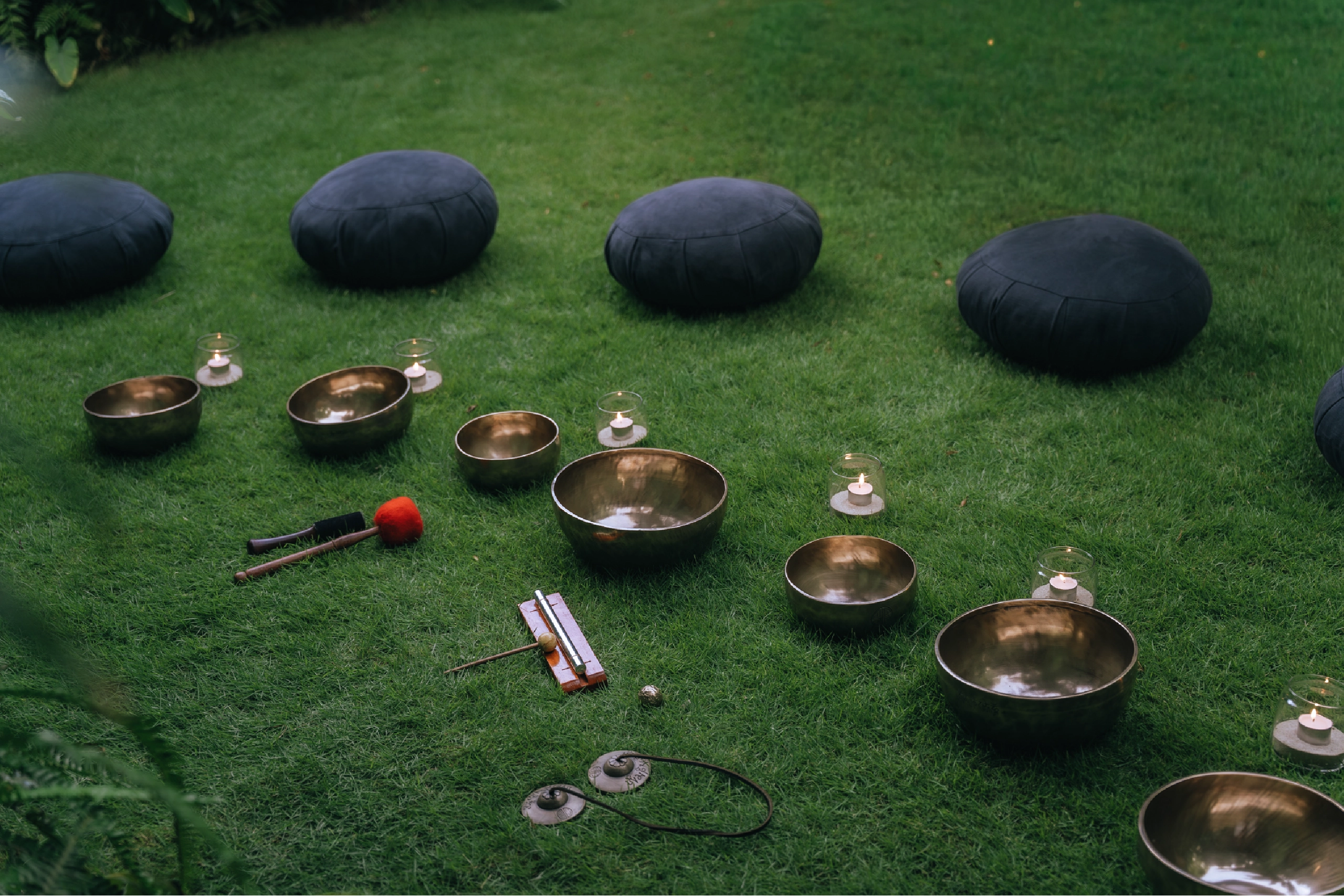
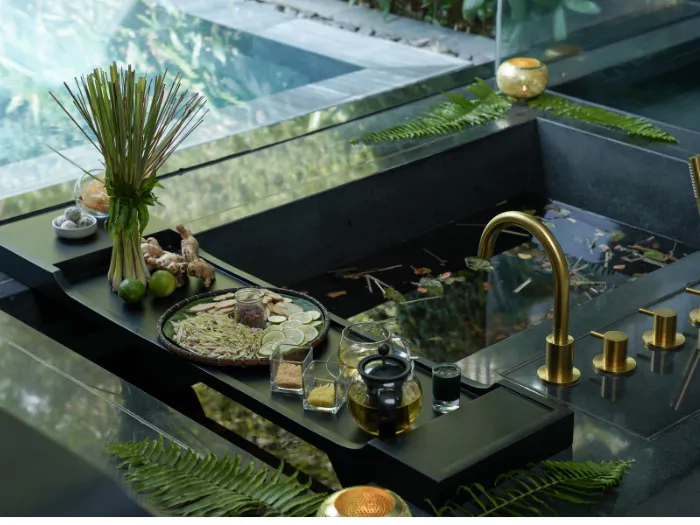
The Marble Mountains are best explored early in the day, when the weather is more comfortable and you still have enough energy for walking, climbing stone steps, and exploring the caves. After your visit, instead of continuing to another attraction, you can return to TIA Wellness Resort and spend the rest of the day on slower-paced experiences.
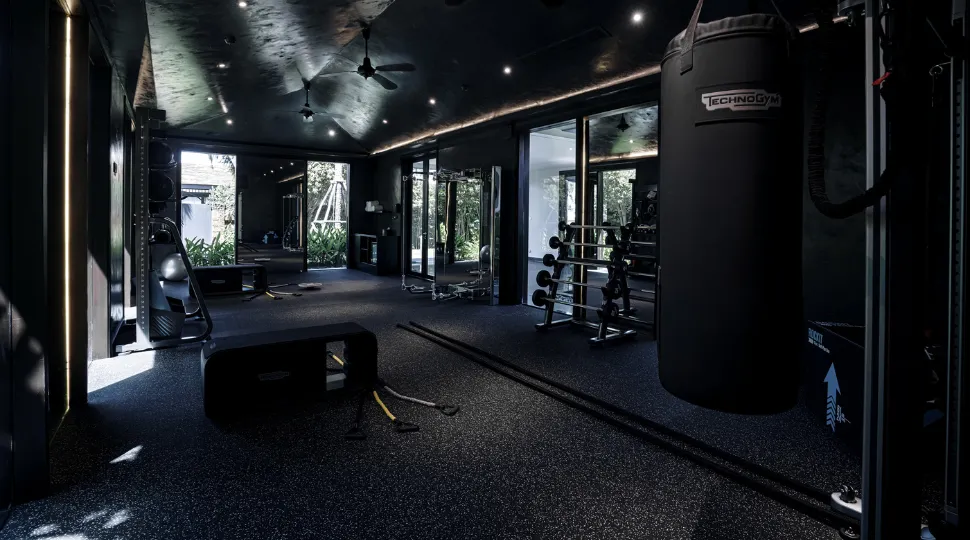
Depending on your preferences, you can choose a wellness treatment, yoga, fitness, relaxation at the resort, or continue with an activity from TIA’s Signature Wellness program. These experiences are built around four pillars: Flow, Breathe, Create, and Nourish, combining movement, breathwork, creativity, nutrition, and local cultural exploration.

Want to continue exploring while still maintaining a relaxed pace?
Explore the Signature Wellness Tours at TIA
A Day Combining the Marble Mountains and TIA
You can start the day with an active exploration experience, then return to the resort to recover rather than spending the entire day moving from one destination to another.
| Time | Experience | Suggestion |
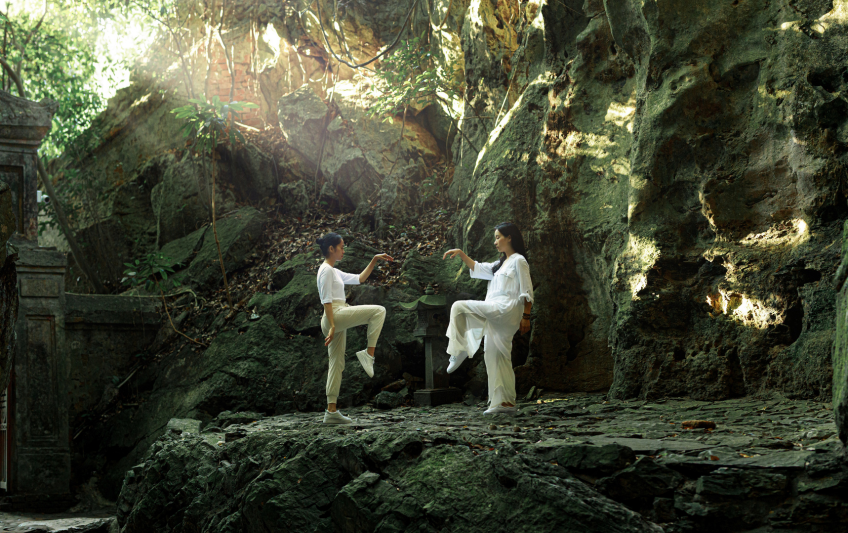
| 06:30 | Marble Mountains & Tai Chi | Explore the pagodas and caves while enjoying gentle movement early in the day |
| 09:00 | Return to TIA | Have breakfast, take a shower, and rest after an active morning |
| Midday | Dining & recovery | Enjoy a meal, relax, and recharge |
| Afternoon | Wellness at TIA | Choose a wellness treatment, yoga, fitness, or simply relax at the resort |
| Evening | Choose based on your energy | Continue exploring Hoi An or stay at TIA for a relaxing evening |
Tip: You do not need to fill your itinerary with as many destinations as possible. Spend the morning exploring the Marble Mountains, then return to TIA to recover, relax, and continue with wellness experiences that suit your pace.
Choose Your Itinerary Based on Your Energy Level
If you want to explore more of Central Vietnam, TIA can support excursions and experiences to Hoi An, Cham Islands, the Thu Bon River, My Son, Ba Na Hills, and Hue, depending on your itinerary and preferences.
Instead of trying to visit as many places as possible in one day, start with a simple question: Do you want to explore, be active, or rest today?
| What you want today | Suggested itinerary |
| Slow down | Marble Mountains → return to TIA → wellness → relaxation |
| Stay active | Marble Mountains & Tai Chi → breakfast → fitness or activities at TIA |
| Explore local culture | Marble Mountains → Hoi An → return to TIA |
| Explore nature | Marble Mountains → Son Tra → relax at TIA |
| Explore more | Marble Mountains → combine My Son, Ba Na Hills, or Hue on another day |
Exploring More Does Not Mean Doing More
One of the easiest ways to drain your energy on a trip is to pack too many attractions into a single day. At TIA, you can plan an exploration experience in the morning and then return to the resort to recover, rather than spending the entire day on the road.
A morning at the Marble Mountains can naturally lead into an afternoon of wellness at TIA. If you still have energy, you can continue to Hoi An or Son Tra. If you would rather slow down, spend the rest of the day resting and focusing on your well-being.
Choose less, but experience more deeply. That is also a way to make the Marble Mountains part of your stay at TIA, rather than simply another destination checked off on the map.
What to bring
A short list, but each item has a reason behind it.
Shoes with grip matter most, and they are also what people most often get wrong. Flip-flops and flat-soled sandals do not work on worn stone steps and damp cave floors. You do not need hiking boots, ordinary trainers are more than enough.
Clothing that covers shoulders and knees is worth thinking about in advance, because Tam Thai and Linh Ung are both active pagodas with resident monks and services. This is not a rule posted at the gate, it is simply courtesy. If you are coming straight from the beach, bring a light layer to throw on.
Cash in Vietnamese dong is not optional here, as covered above. Water is sold on the mountain but at few points and at a markup, so half a litre each is about right. A charged phone torch is essential if you intend to enter Tang Chon, which is properly dark rather than merely dim. And between April and August, a hat and sunscreen are what you will thank yourself for, since both lookouts and the stupa courtyard are fully exposed.
Things you can leave behind are worth naming too: trekking poles, technical footwear, a large pack. The highest summit on Thuy Son is around 106 metres. This is a morning on staircases, not a trek.
So is it worth visiting?
Yes, provided you go at the right hour and do not try to cover all six peaks.
The Marble Mountains are not a spectacular destination, and if you were at Ba Na and the Golden Bridge the day before, the scale here may leave you flat for the first ten minutes. The tallest summit is a little over a hundred metres, the climb is a little over a hundred steps, and there is no structure that makes anyone stop and stare.
What it has is something else entirely. This is a cluster of limestone standing alone in the sand, hollow inside, and for close to four hundred years people have been putting pagodas into those hollows and cutting characters into their walls. Those seventy-eight texts are still where they were made, having weathered season after season of salt air off the East Sea, so that you can now stand half a metre away and read them.
Standing under the five shafts of light inside Huyen Khong at seven in the morning, before the first group has made it up, is one of the few genuinely quiet moments Da Nang has managed to keep for itself. You just have to be there before everyone else.
Frequently asked questions
1. How long does a visit to the Marble Mountains take?
About two hours for the main sights on Thuy Son, three and a half if you add Tang Chon and Am Phu Cave. Allow another fifteen minutes each way from central Da Nang.
2. Does the elevator go all the way to the top?
The elevator is 43 metres, located at the east gate, and takes you to the summit area where the pagodas, stupa and both lookouts are. From there you still walk on relatively level ground, with a few short flights between individual sights. It runs from 7:30 to 17:00 and closes without notice for maintenance or bad weather.
3. Does the 40,000 VND ticket include Am Phu Cave?
No. Am Phu Cave is ticketed separately at 20,000 VND for adults and 7,000 VND for students. The elevator is also separate.
4. Can I pay by card?
No. The ticket booths take cash in Vietnamese dong only. Cards and foreign currency are not accepted, and phone signal inside the caves is unreliable, so bring notes with you.
5. Where are the ma nhai inscriptions and can I see them?
Yes, at no extra charge. They are on the walls of Huyen Khong, Hoa Nghiem, Tang Chon and Van Thong caves, 78 in total. The oldest, from 1640, is in Hoa Nghiem. To understand what they say, hire the on-site guide at the counter for 50,000 VND per group.
6. How old do children need to be?
Around six and up can manage the full route on foot. Younger than that, use the elevator and skip the dark caves. Pushchairs cannot be used anywhere on the mountain.
7. How far is it from central Da Nang?
About 8 km southeast, roughly fifteen minutes by car along Vo Nguyen Giap. Around twenty-five minutes from the airport, and about the same from Hoi An.
8. Are Marble Mountains, Ngu Hanh Son and Non Nuoc the same place?
Yes. Non Nuoc is the older local name, Ngu Hanh Son is the literary name given by Emperor Minh Mang in 1825, and Marble Mountains is the English name. Non Nuoc now tends to refer to the beach and the stone village at the foot of the mountains, while the other two refer to the mountains and the heritage site.
9. Can I visit on a rainy day?
The gates stay open, but think about it first. The limestone is slippery when wet, and both lookouts lose most of their value in poor visibility. If you cannot move the day, take the elevator, focus on Hoa Nghiem, Huyen Khong and Linh Ung, and skip Van Thong and Tang Chon.