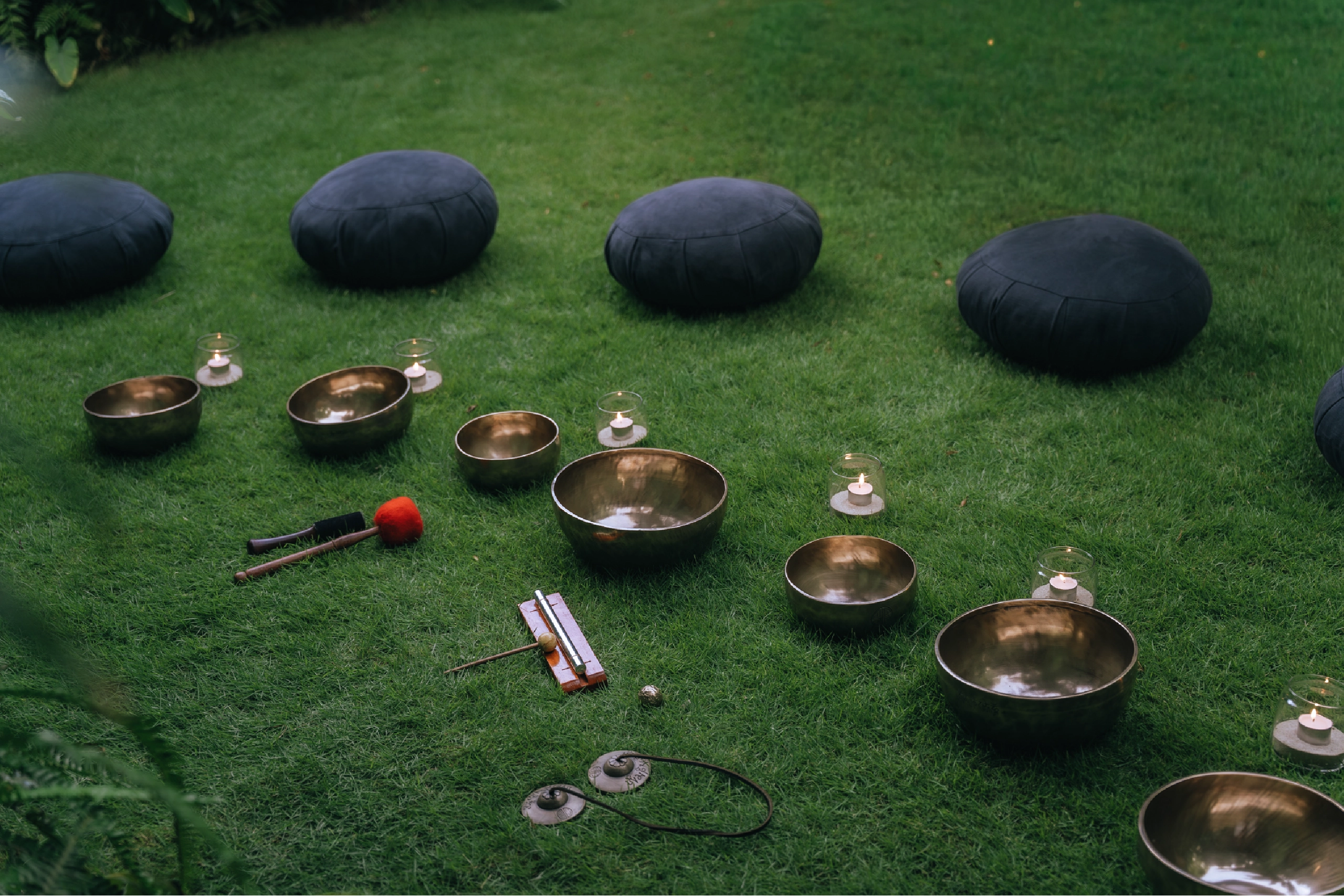
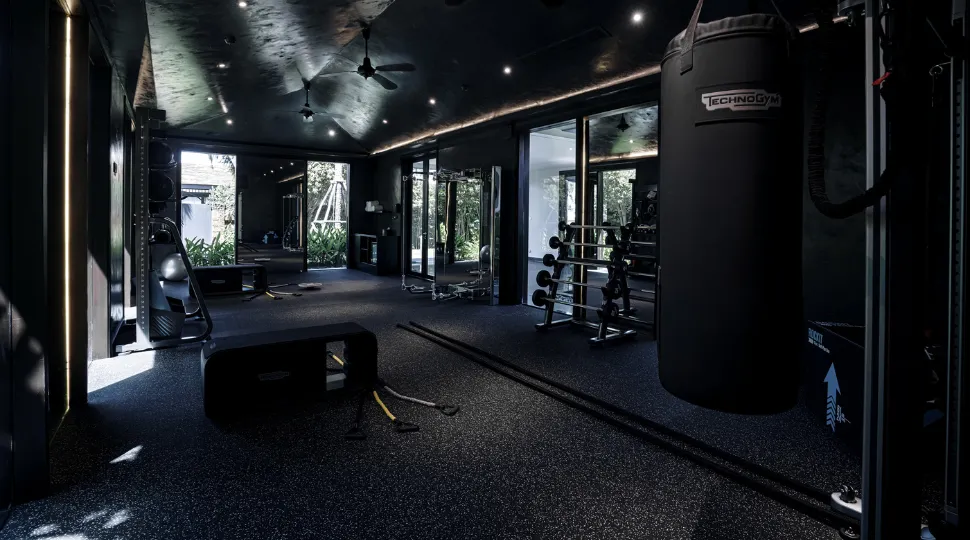
A wellness retreat typically lasts 3 to 7 nights, with the right length depending on what you want to achieve. A 3-night retreat can work for rest and a short reset, 4 nights gives you more time to settle into a new rhythm, while 7 nights allows a deeper break from everyday routines and more time for structured wellness activities.
The key is not simply how many nights you can spare, but what you want the retreat to change. Shorter stays can be enough for rest and recovery, while longer retreats provide more time to establish a consistent routine around sleep, movement, mindfulness, nutrition and relaxation.
Travel time also matters. If your first and last days are largely spent travelling, a 3-night booking may provide fewer full days of retreat than expected. This guide explains what you can realistically expect from 3, 4 and 7 nights, so you can choose a retreat length that matches your goals rather than simply fitting the available days in your calendar.
The short answer, by goal
| What you want from it | Nights you need | Why that number |
| A change of pace and proper sleep | 2 to 3 | Enough to unwind, not enough to shift a habit |
| A genuine reset in how you feel | 4 to 5 | The arrival day is absorbed by travel, leaving three clear days |
| Detox, fasting, or measurable physical change | 7 | These protocols need a build, a middle, and a taper |
| Something you still feel a month later | 10 to 14 | Long enough for a routine to survive the journey home |
| Flying long haul | Add 1 to 2 nights | Jet lag removes the days you were counting on |
If you take only one row from this table, take the last. It is the calculation almost every guide omits, and it explains why so many short retreats end in the disappointment described above.

Why three, four and seven keep appearing
Look across enough programmes and the same numbers surface again and again. That consistency is not a quirk of marketing.
Three nights is the shortest stay in which a structured programme can offer more than a good spa visit. There is room for an initial consultation, two full days of treatment, and a departure morning. Below that you are buying rest rather than a programme, which is an entirely reasonable purchase, but one worth making knowingly.
Four nights is where prescribed programmes generally begin. It gives a wellness guide a full day to observe how you respond before adjusting what follows, which is the difference between a sequence of treatments and an actual protocol. At TIA, the three Private Retreats are each offered as four nights or seven, with nothing between. That gap is deliberate. Five and six nights sit awkwardly against programmes designed around a build and a taper.
Seven nights is the point at which something can be changed rather than merely interrupted. Sleep patterns settle. Appetite recalibrates. A fasting or detox protocol has room for an adjustment phase, a working phase, and a careful return to ordinary eating.
The first day rarely counts
Here is the arithmetic that undermines most short retreats.
You land in the afternoon. There is immigration, luggage, a transfer, a check-in, and a consultation with a wellness guide who needs to understand your sleep, your stress levels, and any physical limitations before prescribing anything at all. By the time that is finished, the day is gone. You may receive one treatment that evening, and it will be a gentle one, because nobody sensible prescribes deep tissue work to a body that has just spent eleven hours in a pressurised cabin.
The departure day is similarly thin. A late checkout buys you a morning session, but you will spend it half-packed and already partly elsewhere.
A three-night stay therefore contains roughly two usable days. A four-night stay contains three. This is before jet lag enters the picture.
For guests arriving from Europe, the time difference to Vietnam is five to six hours. From the west coast of North America it is fourteen to fifteen. The widely cited rule of thumb is that the body adjusts at roughly one time zone per day, and eastward travel is harder than westward. A guest flying from London to Da Nang should expect two nights of broken sleep on arrival. A guest from Los Angeles should plan for rather more.
None of this makes a short stay pointless. It means a three-night retreat at the end of a long-haul flight is, in practice, a different product from a three-night retreat reached by a two-hour drive. If you are crossing continents, add a night to whatever figure first came to mind, and treat the first as arrival rather than as retreat.
Count therapy hours, not nights
Nights are a convenient unit, but they are only a proxy for the thing that matters, which is how much hands-on time you actually receive. Two programmes of identical length can differ by a factor of two in contact hours, and a shorter stay at higher intensity frequently outperforms a longer stay at lower intensity.
The arithmetic is worth doing before you book. At TIA, the Wellness Inclusive rate includes two wellness treatments per night, totalling eighty minutes per person. The Retreat Inclusive tier adds one exclusive retreat therapy of sixty minutes on top of those two, bringing the nightly total to a hundred and forty. The Private Retreats run at the same hundred and forty minutes, prescribed rather than chosen from a menu.
Applied across different lengths, the picture changes shape:
| Stay | At 80 minutes per night | At 140 minutes per night |
| 3 nights | 4 hours | 7 hours |
| 4 nights | 5 hours 20 minutes | 9 hours 20 minutes |
| 5 nights | 6 hours 40 minutes | 11 hours 40 minutes |
| 7 nights | 9 hours 20 minutes | 16 hours 20 minutes |
Read across the rows rather than down the columns. Four nights at the higher intensity delivers more therapy time than seven nights at the lower, and does so using roughly half the annual leave. Where holiday allowance is the binding constraint, raising intensity is usually the better lever than extending the stay.
The reverse deserves saying too. If your goal is genuinely to slow down, a hundred and forty minutes of prescribed therapy daily plus guided practice is a full schedule, and some guests find it more structured than they had pictured. There is no virtue in choosing the denser option merely because it reads as better value on paper.

What actually happens across a week
Understanding the arc helps explain why certain lengths work and others frustrate.
Nights one and two belong to the nervous system. Most guests sleep badly on the first night, whether from travel, from an unfamiliar bed, or simply from the strange discomfort of having nothing urgent to do. By the second night, sleep usually deepens noticeably. This is the phase in which people describe feeling tired rather than rested, which surprises them. It is the body finally acknowledging a debt it has been carrying.
Nights three and four are when the change becomes perceptible. Morning energy returns. Appetite shifts, often towards lighter food without any conscious decision. Guests on fasting protocols typically find the second day hardest and the fourth noticeably easier, which is precisely why a four-night minimum exists for those programmes. Ending at day three would send someone home at their lowest point.
Nights five to seven are where habit forms rather than resolve. The morning practice stops feeling like an appointment and starts feeling like the shape of the day. Sleep is no longer remarkable. This is the difference between a week that feels good while it lasts and a week that alters something afterwards.
Beyond seven nights, the gains shift again, away from how you feel on site and towards what survives the journey home. Two weeks is long enough for a practice to become automatic, and automatic practices travel in a way that merely pleasant ones do not.
What each length can realistically do
Two or three nights
A short stay is best understood as an interruption rather than a change. It will improve your sleep for several nights, take the edge off accumulated tension, and leave you with a clear memory of what unhurried time feels like. Those are genuine benefits and should not be dismissed.
What it will not do is shift a habit, resolve a long-running sleep problem, or produce anything measurable a month later. It is also the wrong length for fasting or detox work, for the reason described above.
Three nights suits a guest who lives within a few hours of the resort, who wants a deliberate pause rather than a project, and who expects to return. It is a poor choice for a once-a-year long-haul trip.
Four or five nights
This is the shortest stay in which a programme can respond to you rather than simply be delivered to you. The first full day establishes a baseline, the second and third allow adjustment, the fourth consolidates.
Four nights is the standard opening duration for prescribed programmes at TIA and at comparable properties across the region, which tells you where the profession has settled after a good deal of trial and error. For a guest travelling from within Asia, four nights is usually sufficient for a real reset. For someone arriving from Europe or North America, five is the equivalent, because the first is spent recovering from the flight.
This length suits most people most of the time. Absent a specific clinical goal, choose here.
Seven nights
A week is the point at which the stay stops being a break from your life and acquires a rhythm of its own. It is also the minimum sensible length for anything involving fasting, detox, or structured physical training.
The Strength and Recovery programme, which pairs two private workouts daily with contrast therapy and a high-protein plant-based meal plan calibrated to your weight and goals, needs that time to progress you safely rather than simply exhaust you. The Body and Mind Cleanse, built around a raw plant-based menu on a sixteen-eight intermittent fasting schedule, needs it even more.
One practical detail that is easy to miss. TIA’s three Private Retreat programmes are designed for single occupancy, because a week-long personalised protocol is built around one person’s responses. Couples travelling together are generally better served by the Retreat Inclusive tier, where both guests receive a full programme without either being fitted around the other.
Ten to fourteen nights
Beyond a week, the returns become less about the stay itself and more about what outlasts it. This is the right length for someone between two chapters of life, recovering from a sustained period of overwork, or making a deliberate change to diet or fitness that they intend to keep.
It is not necessary for most people, and it should not be treated as the aspirational version of a shorter stay. A well-chosen four nights serves most guests better than a poorly-timed fortnight.

The cost of a day you cannot use
There is an economic argument here that rarely gets made plainly, and it cuts against the instinct to book the shortest stay affordable.
Suppose you take three nights. One is consumed by arrival, and the departure morning is half a day at best. You have paid for three nights and received roughly two. The effective cost per usable day is therefore around one and a half times the nightly rate.
Take five nights, and arrival still costs you one. You have paid for five and received about four, so the effective cost per usable day falls to roughly one and a quarter times the nightly rate. Take seven, and the fixed loss of the arrival day is spread thinner still.
This matters more at properties where treatments are included in the rate than at those charging separately, because the nightly rate carries more value. Where a stay includes a hundred and forty minutes of therapy each night, an unused day is not simply an unused room. It is roughly two and a half hours of treatment you have paid for and cannot take.
The practical conclusion is not that longer is always better. It is that the gap between three nights and five is smaller in real terms than the gap in headline price suggests, and that guests who stretch to the longer option rarely regret it.
When a longer stay is not the answer
Honesty requires the counterpoint, because extending is not universally the right move.
If you are travelling with children, or with a partner who has no interest in a structured programme, a longer stay multiplies a tension rather than resolving it. Three nights of everyone being reasonably content beats seven nights of negotiation.
If you have never done anything of this kind before, a week of prescribed therapy, plant-based meals and early mornings is a substantial commitment to make blind. Four nights will tell you whether the format suits you, and you can extend the next time from a position of knowledge.
If your work genuinely cannot be left, a longer stay simply relocates the problem. A guest checking email twice daily from a villa is not on a retreat, they are working somewhere pleasant, and the therapy will not overcome the physiology of a nervous system still on alert.
And if you are in the middle of an acute medical issue, length is not the relevant variable at all. A wellness retreat supports recovery, it does not substitute for clinical care, and that distinction holds at three nights and at thirty.
Matching the Length to the Right TIA Stay
Private Retreats are one option within TIA’s wider wellness stay structure. The right choice depends on how much guidance you want and how specific your goal is.
| Your situation | Suggested stay | What it looks like at TIA |
| Short break with flexibility | 2–4 nights | Wellness Inclusive: Two treatments per night, plus a daily programme of guided wellness sessions that you can choose according to your interests |
| First proper reset with more structure | 4–5 nights | Retreat Inclusive: A prescribed retreat therapy each night, full-board plant-based meals and a dedicated wellness guide |
| A specific goal or deeper transformation | 4 or 7 nights | Private Retreats: Strength & Recovery, Creative Healing or Body & Mind Cleanse, with prescribed daily programmes and single occupancy |
| Long-haul arrival | Add 1–2 nights | Use the additional time to arrive, settle in and keep the first evening deliberately light before beginning a more structured programme |
If you are unsure which option fits, start with your intention, not your number of nights. Share what you want from the retreat and your available travel dates with TIA’s reservations team, then work backwards to the programme and length that make sense.
TIA Private Retreats: Choose the Programme That Fits Your Intention
A wellness retreat is more meaningful when you know what you want to change. TIA’s Private Retreats are designed around specific intentions, combining personalised guidance, therapies, wellness treatments, nutrition and daily practices into a structured four- or seven-night experience.
| Private Retreat | Best for | Core Focus | What Your Days Include | Nutrition | Stay |
| Strength & Recovery | Rebuilding strength, supporting physical recovery and restoring vitality | Strength · Recovery · Nourish | 2 private workouts daily, ice bath, optional steam & sauna, prescribed therapies and wellness treatments | High-protein, plant-based meal plan tailored to your weight and goals | 4 nights / 5 days or 7 nights / 8 days |
| Creative Healing | Releasing stress, restoring emotional balance and reconnecting with creativity | Reiki · Creativity · Breath | Daily private breathwork masterclass and creative workshop, plus 1 Master Therapy and 2 Wellness Treatments per night | Full-board plant-based meal plan | 4 nights / 5 days or 7 nights / 8 days |
| Body & Mind Cleanse | Resetting your routine and creating more space for body and mind | Yoga · Detox · Breath | Daily private yoga and breathwork masterclass, plus 1 Master Therapy and 2 Wellness Treatments per night | Raw plant-based meal plan with a 16:8 intermittent fasting schedule | 4 nights / 5 days or 7 nights / 8 days |
4 Nights or 7 Nights: Which Is Right for You?
The difference is not simply three extra nights. A longer retreat gives you more time to settle into the programme, repeat the practices and move beyond the initial reset.
| What you want from the retreat | 4 Nights / 5 Days | 7 Nights / 8 Days |
| A short reset | A focused break from your usual routine | More time to fully disconnect |
| One specific wellness goal | A structured introduction | More time to deepen the programme |
| A new routine | Start building new habits | More time to practise and reinforce them |
| Exploration beyond the programme | Focus on the core retreat | Includes two private TIA Signature Tours |
| Overall experience | A concentrated reset | A longer, more immersive retreat |
Which Private Retreat Fits Your Intention?
| If you are thinking… | Your programme |
| “I want to feel stronger and recover physically.” | Strength & Recovery |
| “I need space to release stress and feel more balanced.” | Creative Healing |
| “I want to reset my body and mind.” | Body & Mind Cleanse |
Private Retreats Are Not Just Longer Spa Stays
A Private Retreat at TIA is structured around a specific intention rather than a collection of treatments. Your stay brings together one-to-one guidance, therapies, movement, nutrition and daily wellness practices within a prescribed programme.
That structure matters because a retreat is not only about what you do. It is also about having enough time for the experience to settle in.
Four nights can give you a reset. Seven nights give you more room to turn that reset into a rhythm.
For a broader introduction, read What Is a Wellness Retreat and What Are the Benefits? to understand what a typical wellness retreat involves and who these experiences may suit.
4 questions that settle it
How far are you flying? Under four hours, count every night. Over eight, discount the first and add one to compensate.
Do you want to feel different while you are there, or after you get home? The first is achievable in three nights. The second takes seven.
Does your goal involve food? Any fasting, detox or dietary protocol needs seven nights to move safely through its phases. With four available, choose a different programme rather than a compressed version of that one.
Are you travelling alone or with someone? The most personalised programmes are built for single occupancy. Coming as a couple, look at the tier below, where the structure accommodates two people properly.
Frequently asked questions
1. Is a three-night wellness retreat worth it?
Yes, if you are travelling a short distance and your goal is rest rather than change. It gives you roughly two usable days. It is the wrong length for detox, fasting, or any programme that builds across several days.
2. What is the ideal length for a first wellness retreat?
Four or five nights. Long enough for a programme to adapt to how you respond, short enough that you are not committing a fortnight to something untried.
3. How long before you feel the benefits?
Most guests sleep noticeably better by the second or third night. Changes in energy and appetite tend to appear around the fourth. Anything that lasts beyond the trip generally requires a week.
4. Does the arrival day count as part of the retreat?
Only partly. Arrival is normally taken up by the transfer, check-in and initial consultation, with at most one gentle treatment in the evening. Plan on it being a settling day.
5. How many treatments should I expect per day?
This varies by programme rather than by length. At TIA, Wellness Inclusive includes eighty minutes of treatment per night, while Retreat Inclusive and the Private Retreats include a hundred and forty. Multiply by your nights to compare properties on a like-for-like basis.
6. Is seven nights too long for a first visit?
Not if your goal requires it, particularly anything involving fasting or structured training. If you are simply curious about the format, four nights will tell you what you need to know.
7. Can I extend once I am there?
Often, subject to availability. Prescribed programmes are structured around a set number of nights and are better booked at the intended length from the outset. If uncertain, book the longer option, since shortening is usually simpler than adding.
8. Does a longer retreat always produce better results?
No. Length only helps when it matches the goal, the travel distance, and your readiness for the format. A well-chosen four nights routinely outperforms a badly-timed two weeks.